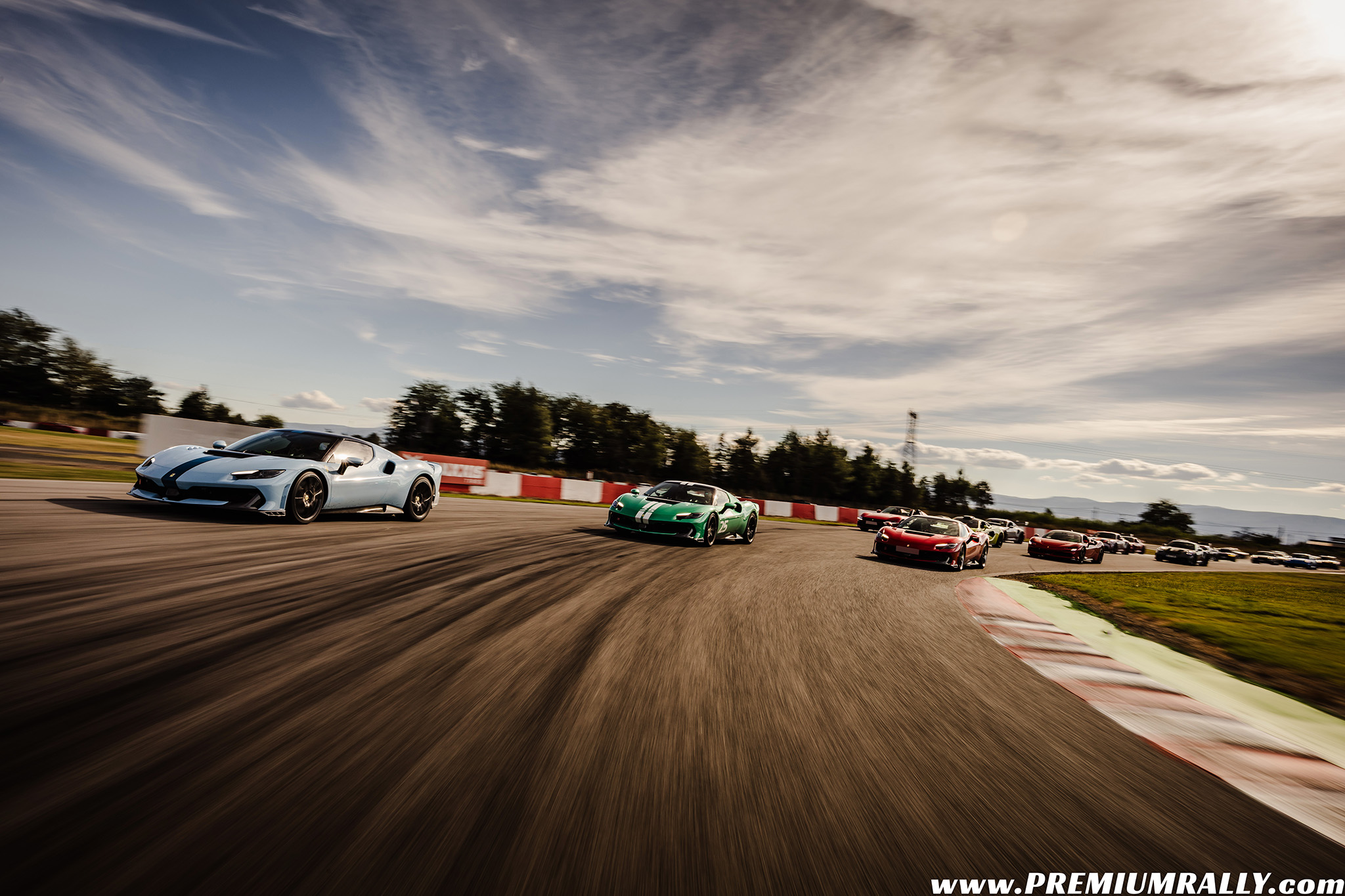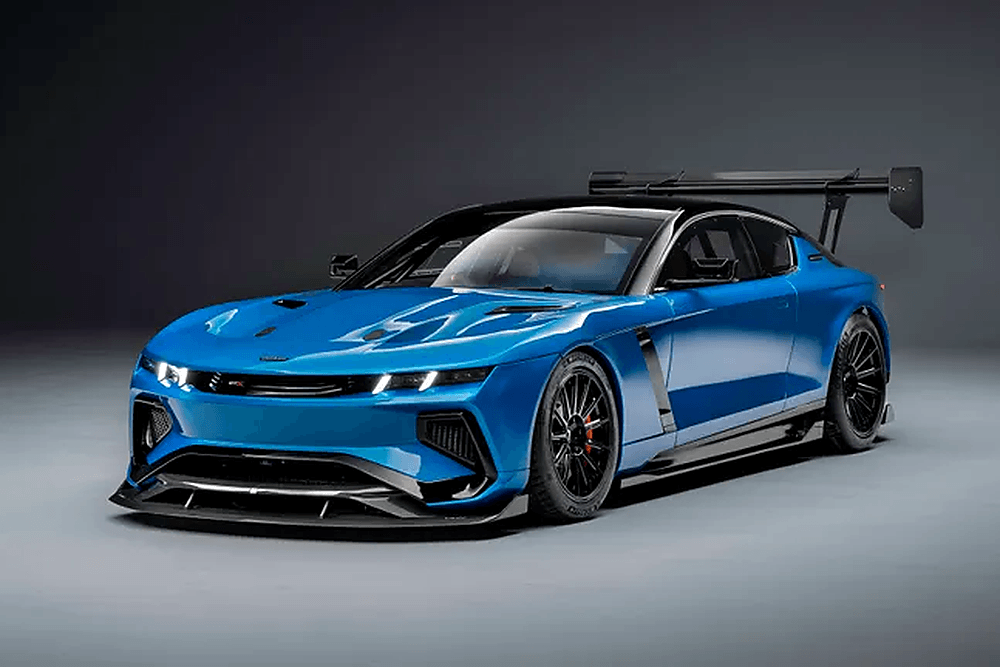
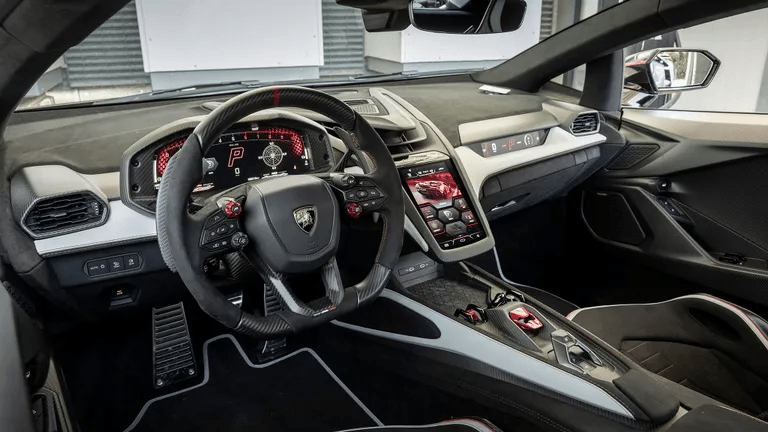
Modern supercars have reached a level where extreme performance is almost taken for granted. Many of them accelerate from 0 to 60 miles per hour in about two seconds, and a top speed over 200 miles per hour is becoming increasingly common.
As a result, impressive technical specifications alone are no longer sufficient to distinguish one exotic car from another. Manufacturers are increasingly focusing on driver engagement, the character of the car, and the overall feel behind the wheel.
For some brands, this means a return to the manual transmission.
Lamborghini, however, is taking a different path.
Super cars with manual gears are returning
In recent years, several top-class manufacturers have once again shown interest in manual gearboxes.
McLaren, Gordon Murray Special Vehicles, Spyker, Pagani, and Aston Martin are experimenting with different ways to offer drivers a more traditional feel when shifting gears.
Ferrari also developed a system that recreates part of the feel of manual shifting and clutch work, even though it uses an automated transmission at its core. Koenigsegg already presented a similar concept.
These developments show that wealthy buyers of high-performance cars are increasingly valuing engagement and mechanical interaction with the car, not just maximum speed.
Naturally, the question arises: will Lamborghini return to the manual transmission?
For now, the answer seems to be "no".
Lamborghini: manual transmission is "not being considered"
Lamborghini's Chief Marketing Director Federico Foschini states that the company is aware of the growing interest in manual transmissions.
Lamborghini, however, believes that the strategy of automated gearboxes is more suitable for utilizing the full potential of the latest models.
According to Foschini, a manual transmission could make sense for a niche model. Nevertheless, Lamborghini's current priority is maximum performance, modern technology, and engaging driving through the current automated transmissions.
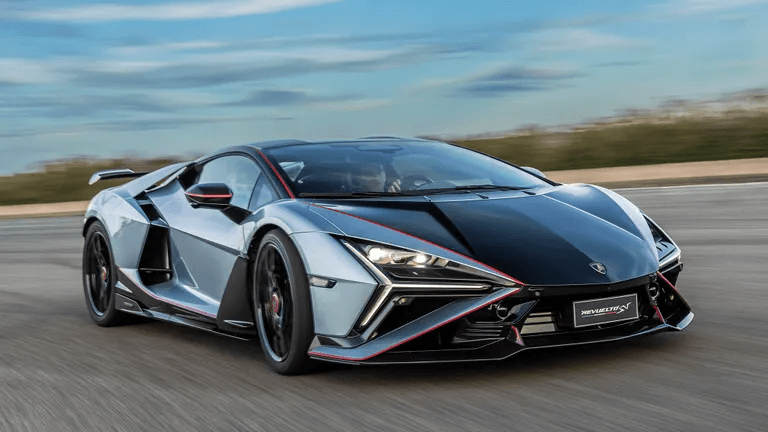
This is especially important for cars like Revuelto SV, where the powertrain, hybrid system, gearbox, and electronic control work in close coordination.
A traditional manual transmission could hinder the use of the full potential of such a complex car.
Therefore, Lamborghini is not considering the possibility of a manual transmission in the short term.
Performance remains the main priority
Lamborghini's modern models rely heavily on advanced electronics and hybrid technologies.
The gearbox is no longer an independent mechanical component. Instead, it is part of a much larger system that includes the engine, electric motors, clutch control, regenerative braking, and dynamic control software.
Automatic transmissions and those with dual clutches can communicate almost instantly with all these systems.
They can select the right gear at the right moment, coordinate shifting with electric assistance, and keep the powertrain in its optimal operating range.
A traditional manual transmission would give the driver more control. On the other hand, it could limit the engineers' ability at Lamborghini to optimize the entire powertrain system.
For now, Lamborghini chooses technology and maximum performance.
Lamborghini with manual gears is not entirely impossible
Although Lamborghini has no short-term plans for a manual transmission, the company has not rejected the idea forever.
Foschini describes the manual transmission as a possibility, which suggests the concept could be considered in the future.
However, developing it would create significant engineering challenges.
The current Revuelto, for example, uses an unusual powertrain configuration. The V12 engine is oriented rearward, while the gearbox is centrally located in the car.
This design differs significantly from the one used in the older models of Lamborghini.
Therefore, installing an existing manual transmission would likely be extremely difficult. Creating a completely new gearbox specifically for a small car series would also be very expensive.
Revuelto would be difficult to become a model with manual gears
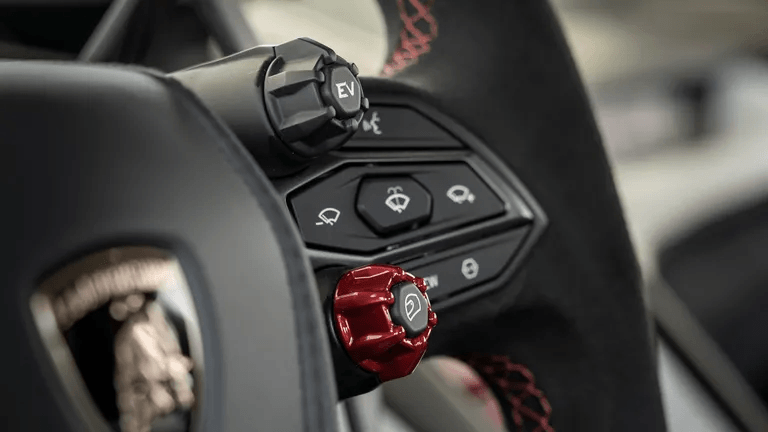
The architecture of Revuelto shows why simply adding a clutch pedal and gear lever would not be sufficient.
The hybrid system integrates several electric motors with the internal combustion engine and the transmission.
Each component is designed to work as part of a coordinated system.
Replacing the existing transmission with a conventional manual gearbox may require significant changes to the drivetrain, electronics, component layout, and software.
This would make the development of Revuelto with manual gears expensive even by supercar standards.
The technical challenge becomes even greater if Lamborghini wants to maintain the same acceleration, emissions, and hybrid system functionality.
Therefore, a series version of Revuelto with a manual gearbox appears unlikely.
Could Temerario be a better candidate?
Lamborghini Temerario uses a more conventional drivetrain configuration, which theoretically would facilitate the integration of a manual gearbox.
However, another problem arises here.
Temerario also relies on a complex hybrid system.
Lamborghini will need to either modify an existing manual transmission so that it communicates correctly with the hybrid components, or rework parts of the hybrid system itself.
Neither solution would be easy.
Developing the necessary hardware and software for a model that is likely to be produced in limited quantities could make the project difficult to justify financially.
Ferrari may show another path for Lamborghini
One possible solution would be the creation of a simulated manual transmission feel.
Ferrari has already experimented with this approach, combining a traditional-style clutch pedal and gear lever with an automated transmission.
Instead of mechanically controlling the gears in the classical way, the driver uses controls that send commands to the automatic gearbox when and how to shift.
Koenigsegg also uses a similar strategy.
This approach can preserve many of the advantages of modern automated transmissions, while simultaneously providing greater driver engagement.
For Lamborghini, a similar system could be a more practical way to satisfy enthusiasts without requiring a complete overhaul of the existing drivetrain.
Why a simulated manual transmission may make sense
At first glance, a simulated manual transmission may sound less appealing than a real three-pedal gearbox.
However, it can solve several problems at once.
Lamborghini could retain the fast shifting and precise electronic control that hybrid systems need. At the same time, the driver would get greater engagement through a traditionally looking gear lever and clutch pedal.
Such a system would also allow the Lamborghini to retain high performance and at the same time offer a more emotional driving experience.
This is important because today's supercars are so fast that manufacturers increasingly need to differentiate them through the feel behind the wheel, not just through the numbers.
An experience resembling manual shifting can become one of the ways to achieve this goal.
Lamborghini is likely watching the market
Although Lamborghini has no immediate plans for a manual gearbox, solutions from other manufacturers may influence the company's future strategy.
If supercars with real or simulated manual transmissions turn out to be very popular, Lamborghini may eventually reconsider its position.
Limited series models appear to be the most logical possibility.
A special niche version could justify more unconventional engineering solutions, without Lamborghini changing its transmission strategy across its entire model range.
For now, however, the company remains firmly oriented towards automated gearboxes.
Why Lamborghini remains loyal to automatic transmissions
Lamborghini's position reflects the increasing complexity of modern high-performance cars.
A manual gearbox can increase driver engagement, but the latest models from the brand rely on tightly integrated hybrid systems and advanced electronics.
Automated transmissions allow these technologies to work more effectively together.
For now, Lamborghini considers maximizing the performance and capabilities of cars like Revuelto SV to be more important than following the renewed interest in manual gearboxes.
This does not mean that a Lamborghini with a manual transmission will never return.
Enthusiasts who hope for a new Lamborghini with three pedals and a traditional gear lever, however, should not expect it in the near future.