
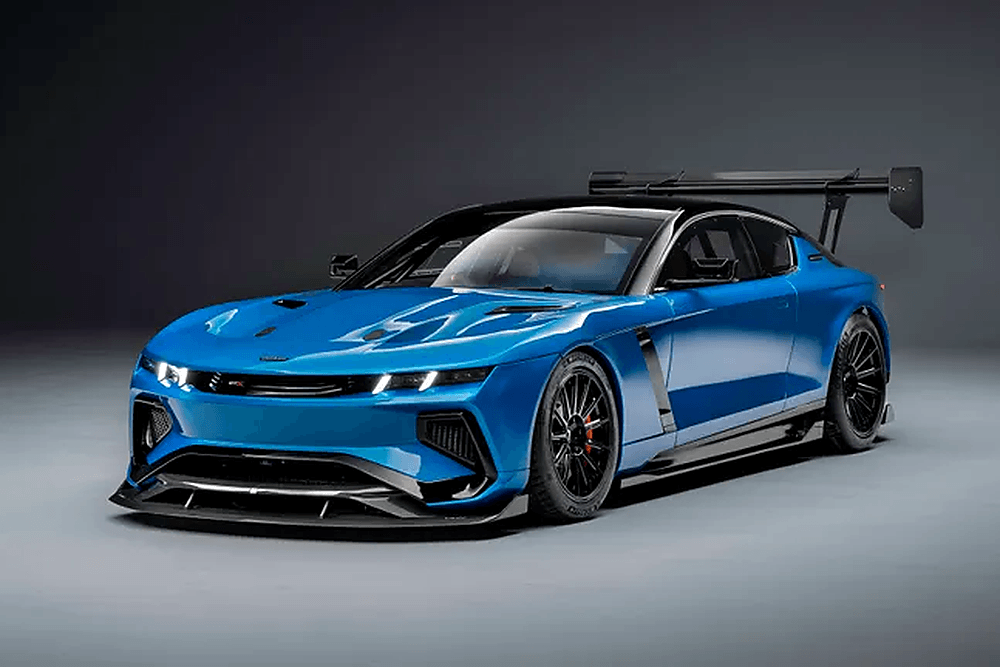
Jensen Interceptor GTX is a modern interpretation of one of the most recognizable British grand tourers. Instead of simply recreating the original Interceptor, Jensen International Automotive develops a fully functional track-only prototype to show what the new generation of Jensen models could look like.
The car is officially described as an enhanced prototype and an active conceptual model. If there is sufficient customer interest, it could give rise to two road-going models: a lighter and performance-oriented Interceptor GTR and a more luxurious Interceptor GT.
For now, however, GTX stands alone as a 960-horsepower, rear-wheel drive track car aimed at enthusiasts who want something very different from the usual Porsche, Ferrari, Lamborghini, or Mercedes-AMG.
What is Jensen Interceptor GTX?
The new Interceptor GTX is a modern, track-oriented evolution of the original Jensen Interceptor – the British grand tourer produced between 1966 and 1976.
Jensen International Automotive already has significant experience with the model. Over the past 16 years, the company has built around 50 high-end restomod versions of the Interceptor.
However, founder David Durden believes the market for heavily modified classic Interceptor models is gradually shrinking. Fewer buyers are willing to pay over half a million dollars for a completely rebuilt old car, which is one of the reasons the company is moving toward an entirely new project.
That is why GTX is not just another restomod. It is conceived as the first step toward a new model family for Jensen.
Classic influence from the Interceptor with modern design
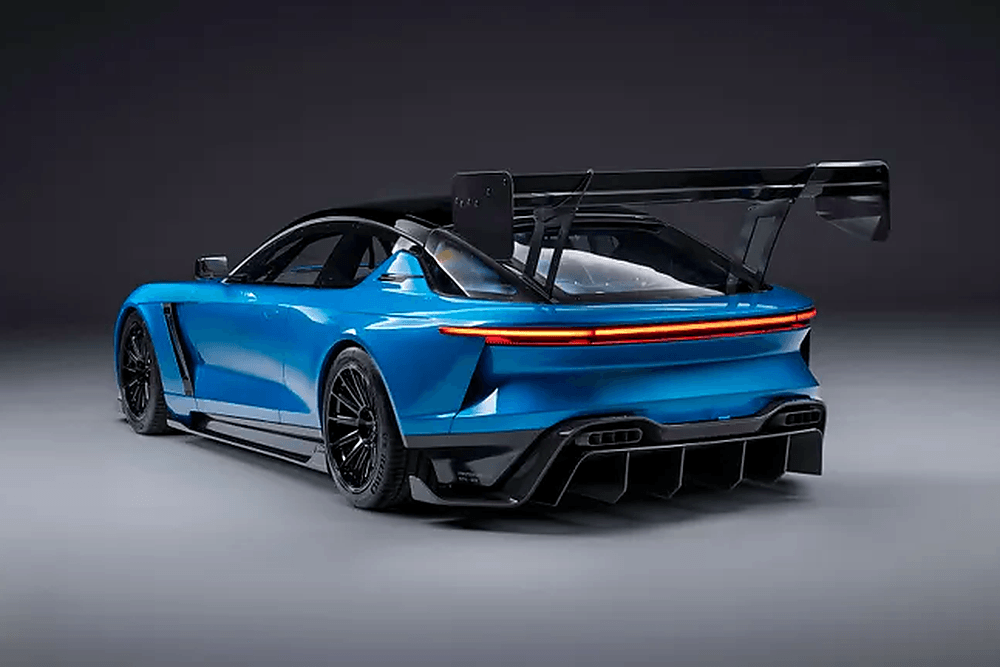
The new Interceptor GTX does not directly copy the original car.
Instead, some design elements subtly remind of the classic model.
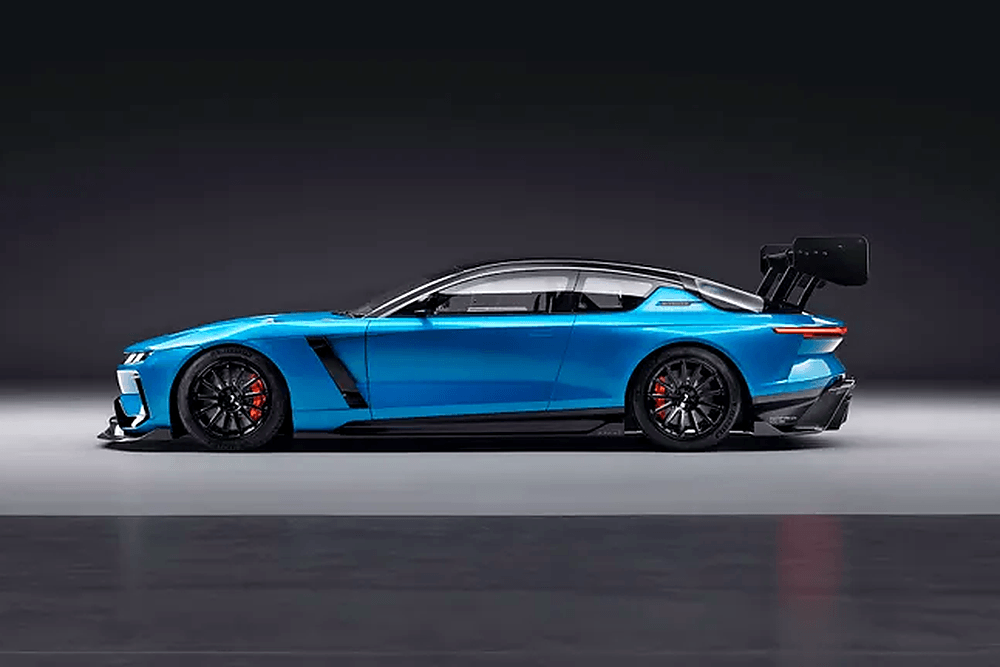
The rear panels recall the characteristic C-pillar shape of the original Interceptor, and the shoulder line carries through to the rear and continues under the rear window.
GTX retains the typical proportions of the old model with a large distance from the dashboard to the front axle and a passenger compartment moved further back.
The front, however, is entirely modern, with narrow LED headlights, a thin grille, and large cooling vents.
The result is a car that combines the familiar proportions of the Interceptor with the language of a modern high-performance car.
Who designed the new Jensen Interceptor GTX?
The hand-formed aluminum body of GTX is designed by the British consultancy company Avant Design, based in Leamington Spa.
The company was founded by Jonathan and Chris Gould and has experience with lightweight electric sports cars and various conceptual projects.
It is Avant Design that approaches Jensen International Automotive with the idea for a new Interceptor, which starts the project.
Another important person in the project is Jeff Quayle, whose family has a long history with Jensen.
His father Keith Quayle played an important role in the entry of British sports cars into the US, and later became involved in the history of Jensen after the acquisition of the brand's factory in the 70s.
This family legacy gives the new project a direct connection to the past of Jensen.
Aluminum chassis instead of carbon
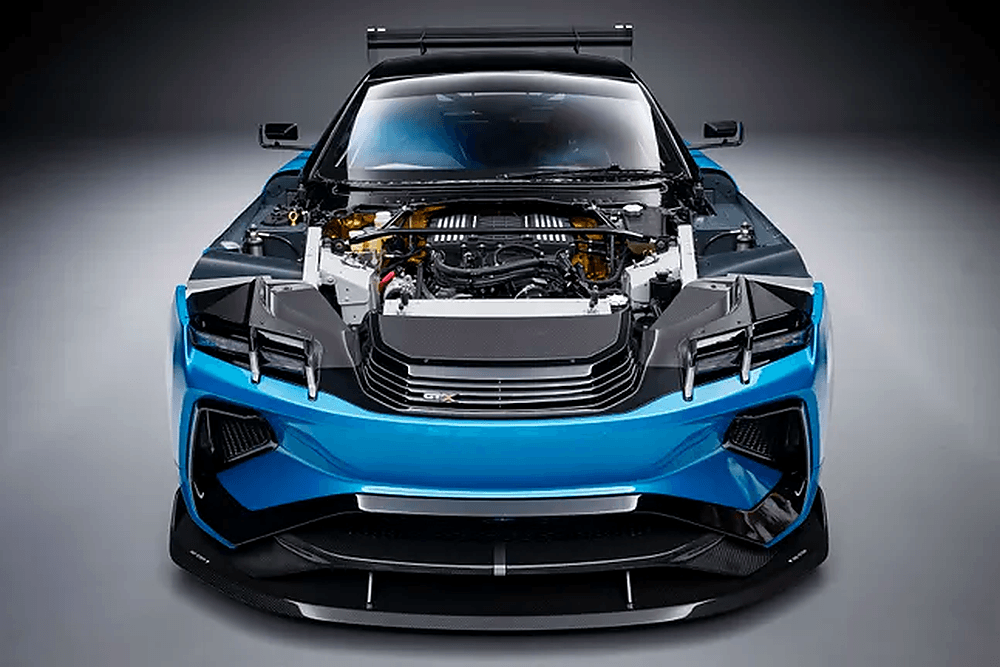
Interceptor GTX uses an entirely aluminum chassis composed of bonded and riveted extruded profiles.
This may seem surprising, as Durden has extensive experience with carbon materials.
However, aluminum offers an important advantage for a low-volume prototype: flexibility.
A carbon monocoque would require expensive equipment and would fix the car's main dimensions at an early stage of development.
The aluminum structure is cheaper to produce and can be modified much more easily.
This makes it particularly suitable for a project that may continue to evolve before the eventual creation of production road versions.
Race-style suspension and brakes
Much of the mechanics of Jensen Interceptor GTX comes directly from motorsports.
The suspension is aluminum multi-link at the front and rear.
Three-stage adjustable coil-over shocks from British specialist Nitron are responsible for the springs and damping.
The steering uses hydraulic assistance with rack and pinion.
The braking system is developed by BG Developments and uses floating steel discs, AP Racing calipers and racing pads.
The car also has an adjustable ABS system, similar to those used in cars like the Mercedes-AMG GT3.
Sequential transmission and rear gearing
Interceptor GTX uses a rear-mounted six-speed sequential transaxle transmission from Samsonas Motorsport.
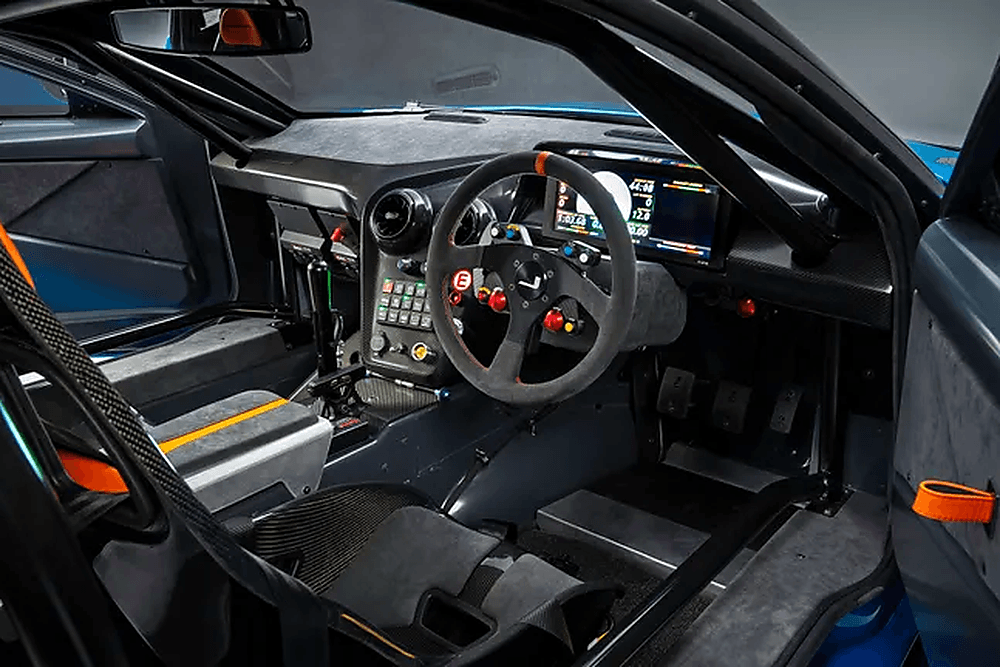
The gears can be changed via a lever in the central tunnel or with paddle shifters on the steering wheel.
Power is delivered entirely to the rear wheels.
A Wavetrac limited-slip differential helps manage traction and uses a special system that maintains grip even when one rear wheel loses contact with the road surface.
The car uses 20-inch forged Vossen wheels.
This configuration brings the GTX much closer to a race car than to a traditional grand tourer.
Hand-formed aluminum bodywork
The body of the Interceptor GTX is hand-built by Coventry Metalcraft, a British company specialized in coachbuilding and prototype manufacturing.
Although hand-forming aluminum panels requires highly skilled labor, it can be financially justified in extremely small production runs.
According to Duerden, the existing equipment should last for about 10 to 15 cars before it needs to be restored.
Carbon is still used in some areas, mainly in the aggressive aerodynamic elements on the lower part of the body.
A large part of these racing components, including the huge rear wing, probably will not be present if the road versions GTR and GT reach production.
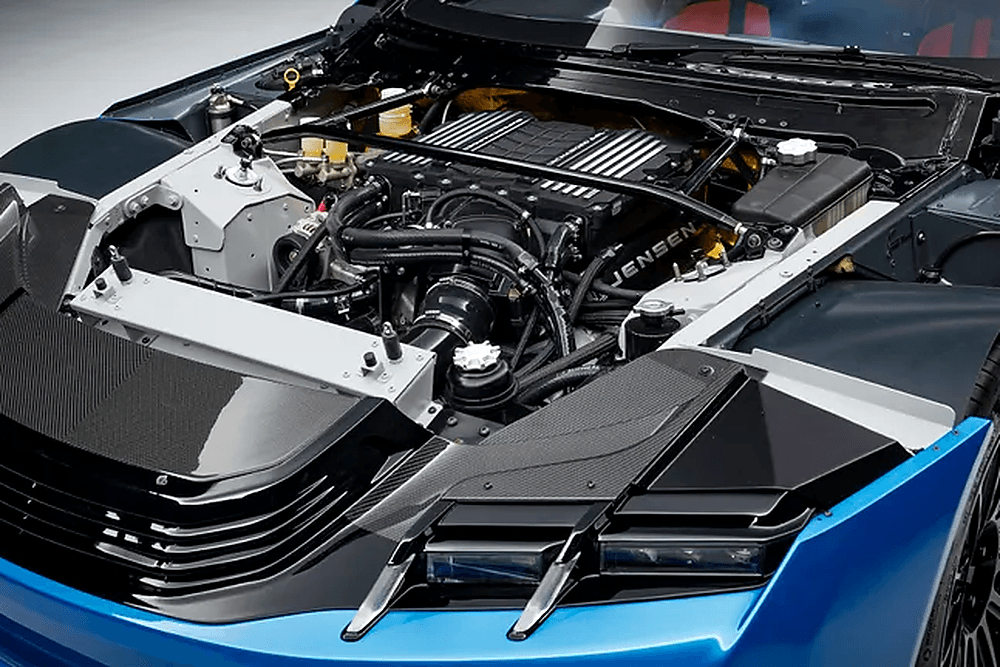
6.8-liter supercharged V8 with 960 hp.
The original Jensen Interceptor used Chrysler V8 engines, but the new GTX follows the same British-American philosophy with a modern Chevrolet engine.
The engine is built by Late Model Engines in Houston, Texas.
It is based on the supercharged LT5, developed for the C7 Corvette ZR1, but only about 20% of the parts remain standard GM components.
The displacement is increased to 6.8 liters.
The engine receives:
- forged crankshaft
- forged connecting rods
- CNC machined cylinder heads
- titanium valves
- variable valve timing
- direct fuel injection
- Motec racing-type engine management
LME states that the engine can safely develop up to 1200 hp.
For the Interceptor GTX, however, the power is limited to 960 hp.
A carbon driveshaft, located in a rigid aluminum torque tube construction, transmits the power back to the transmission.
How fast is the Jensen Interceptor GTX?
The GTX is expected to accelerate from 0 to 60 mph in around 2.8 seconds.
This is particularly impressive, considering the car weighs approximately 3637 lb.
Nevertheless, chasing absolute lap times is not the main goal of the project.
Jensen points out that the car should be fast, fun and exciting, rather than optimized to the last tenth of a second like a homologated GT3 or GT4 racing car.
This philosophy also influences the choice of tires – Michelin Pilot Sport 4S instead of pure racing slick tires.
The GTX uses 275/40 up front and 345/30 at the rear.
For whom is the Jensen Interceptor GTX created?
The Interceptor GTX is aimed at wealthy enthusiasts who want something rare and different for track day events.
The car has almost all the typical elements of a race car, including:
- FIA approved safety cell
- carbon racing seats Tillett
- six-point harnesses
- fire suppression system Lifeline
- sequential transmission
- adjustable suspension
- racing brakes
Nevertheless, the car is not designed to meet FIA GT2, GT3 or GT4 regulations.
Instead, it is intended for someone who wants a very fast, loud and characterful track car, without arriving with yet another Porsche, Ferrari, Lamborghini or Mercedes-AMG.
The GTX is actually a proof of concept
The most important role of the Jensen Interceptor GTX is probably that of a development platform.
Jensen explains that it starts with the track-oriented GTX, as it most clearly demonstrates the engineering concept, the design direction, and the network of specialized suppliers behind the new Interceptor program.
Around 80% of the exterior shape of the GTX, including major panels and instrumentation, is planned to be carried over to future road models.
The car is also designed so that key components can be relatively easily replaced.
For example, the race six-speed dog-ring transmission could be replaced with a more road-appropriate eight-speed dual-clutch transmission, such as the Tremec TR-9080, used in the C8 Corvette and Ford Mustang GTD.
This modular approach would allow Jensen to develop the car without starting from scratch.
Will a road-going Jensen Interceptor return?
If there is sufficient buyer interest, Jensen plans to develop two versions for public roads.
The first would be the Interceptor GTR – lighter and more performance-oriented.
Following it would come the Interceptor GT – a more luxurious version with a fully finished interior and room for four.
The price of the road versions is expected to exceed $2 million.
That is significantly more than the GTX, whose estimated price is around $1.2 million.
For now, these cars remain dependent on customer interest and the availability of investments.
Technical specifications of the Jensen Interceptor GTX
| Indicator | Jensen Interceptor GTX |
|---|---|
| Price | $1.2 million |
| Configuration | Front-engine, rear-wheel drive |
| Body | 2-door, 2-seater coupe |
| Engine | 6.8-liter supercharged V8 |
| Power | 960 hp |
| Torque | 1000 lb-ft |
| Transmission | 6-speed sequential |
| Weight | 3637 lb |
| Wheelbase | 116.5 in |
| Length | 206.8 in |
| Width | 80.0 in |
| Height | 50.0 in |
| 0–60 mph | Approximately 2.8 seconds |
| EPA fuel consumption | No data yet |
| EPA range | No data yet |
These figures show how serious a machine the GTX is, despite its status as a prototype.
Is the Jensen Interceptor GTX worth the attention?
The Jensen Interceptor GTX is interesting precisely because it does not try to directly compete with the fastest hypercars in the world.
Instead, it revives the original philosophy of Jensen in a modern form: a powerful, hand-built British GT with American V8 power, distinctive design, and strong character.
The aluminum chassis, racing suspension, sequential gearbox, supercharged V8 with 960 hp, and hand-built body make it much more than a design concept.
Even more importantly,it gives Jensen a real carthat can be shown and tested by potential customers.
If enough enthusiasts show interest, the GTX could become the basis for an entirely new generation of Jensen Interceptor.
For now, it remains one of the most unusual and ambitious cars for track day events, intended for people who want something different from established supercars.