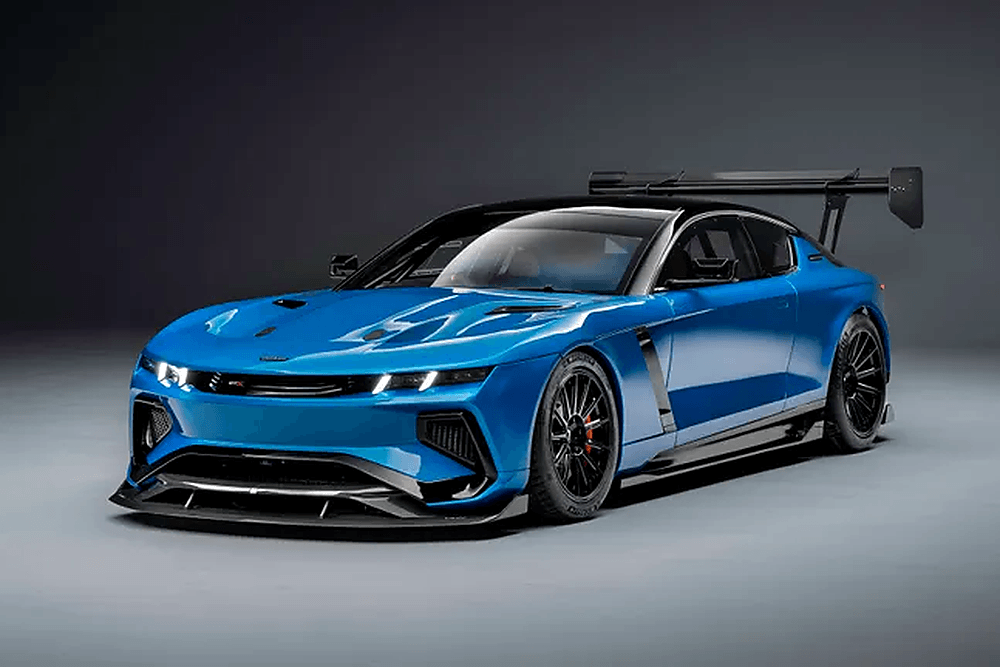
Engineering firm Capricorn storms the hypercar scene with an elegant coupe focused on old-school driving
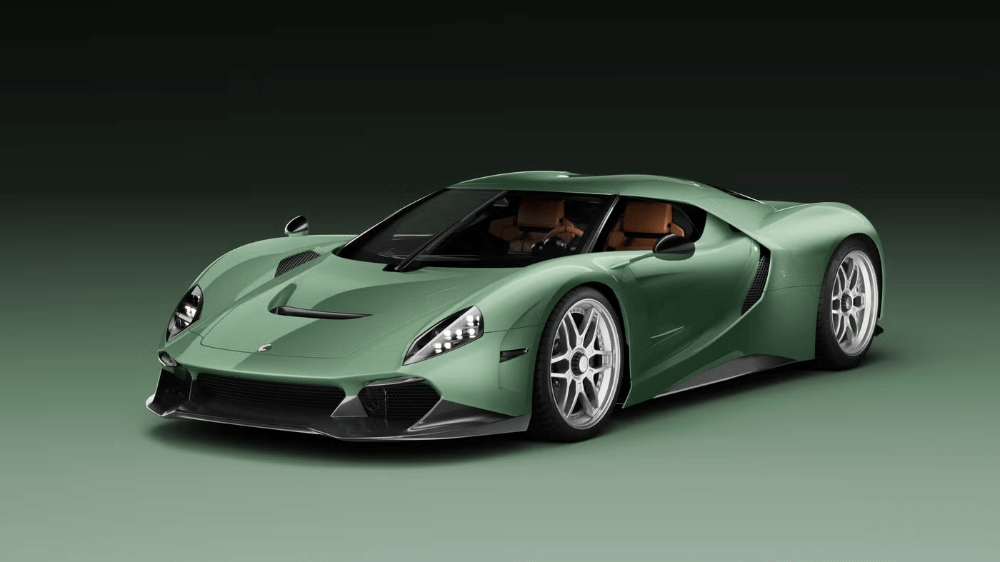
The Italian design house Zagato has long been synonymous with sculptural automotive art. From the sensuousAston Martin Vanquish Zagato to the incredibly elegant Alfa Romeo TZ3 Stradale, its creations have always carried an aura of exclusivity and aesthetic daring. Now the legendary coachbuilder is lending its magic to a newcomer - the Capricorn 01 Zagato - a breath-taking hypercar that combines Italian design finesse with raw American muscle and German engineering precision.
German engineering meets Italian emotion
Although Capricorn Group may not be a household name, its fingerprints can be found on some of the most iconic sports machines of the modern era. The German engineering firm has crafted components for the Bugatti Veyron and Bolide, contributed aerodynamic expertise to the Audi R8, and even helpedfine-tune the dynamic rear wing of the Porsche 911 GT3 RS. Its experience in Formula 1 and endurance racing further cements its reputation for high achievement.
Now Capricorn is stepping into the spotlight with its own creation - a driver-focused hypercar designed not to chase lap times but to revive the lost art of mechanical connection.
Power with purpose
Under the carbon-fibre bodywork sculpted by Zagato lies a 5.2-litre supercharged V-8 engine based on Ford, hand-built by Capricorn engineers. The block started life as a 5.0-litre unit before being bored out, fitted with a custom crankshaft, rods, pistons, and topped with a bespoke supercharger. With Capricorn’s proprietary ECU and a new intake and exhaust system, the engine produces a staggering 887 horsepower and 737 pound-feet of torque, revving freely to 9000 rpm.
Power is delivered via a five-speed manual gearbox with a dog-leg layout, ensuring that every shift is a deliberate, tactile experience - a rare pleasure in a world dominated by dual-clutch automatics. With rear-wheel drive and a total weight under 2645 pounds, the Capricorn 01 accelerates to 100 km/h in less than three seconds and continues to a top speed of 365 km/h.
A chassis built for racing
The foundation of the Capricorn 01 is as refined as its powertrain. A carbon-fibre monocoque tub is mated to the car, with the front and rear subframes designed in the spirit of LMP1 endurance racers. Its unequal-length wishbone suspension is paired with springs, dampers, and anti-roll bars supplied by Bilstein, providing composure at high speeds. Brembo six-piston carbon-ceramic brakes handle braking duties, combining power with balance.
The Zagato sculptural touch
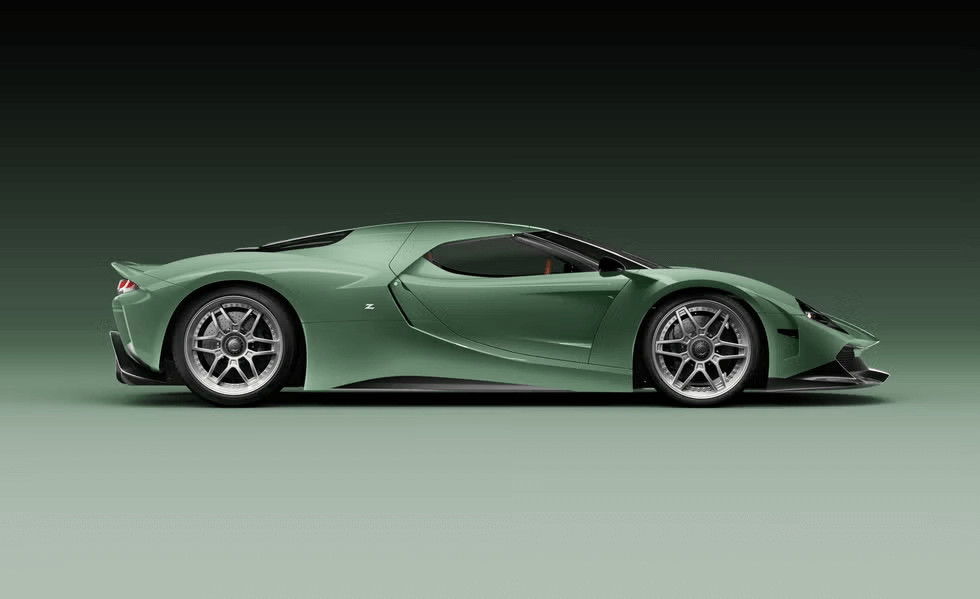
Visually, the Capricorn 01 Zagato achieves a balance between restraint and aggression. Its long, low silhouette directs airflow with deliberate grace - every crease, vent, and contour serves a purpose. The signature double-bubble roof, slim LED taillights, and C-pillar supports evoke the 2017 Ford GT, while gullwing doors add a dash of theatrical flair. Avoiding oversized wings, the car instead relies on underbody aerodynamics - a testament to engineering finesse over showmanship.
An analogue sanctuary
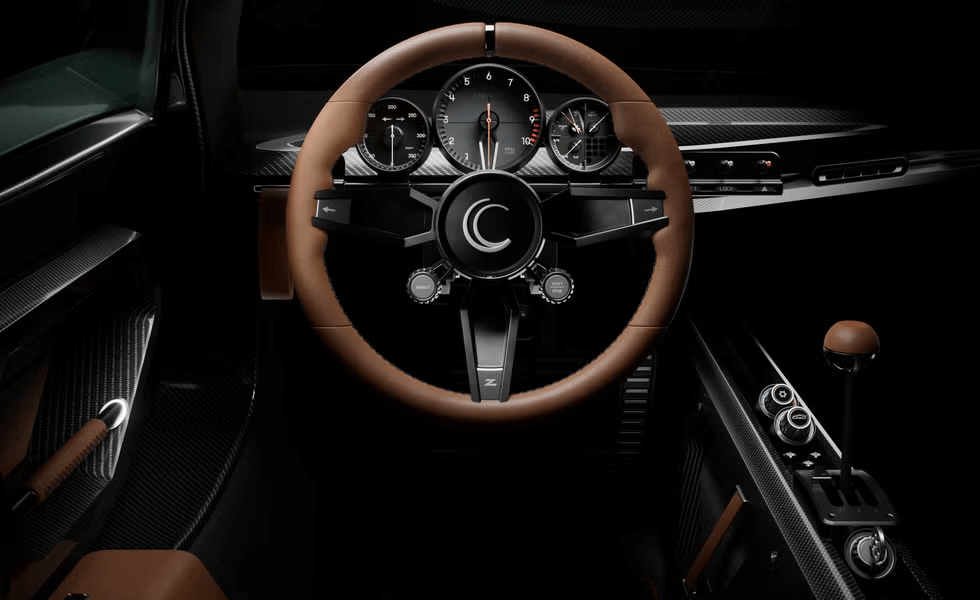
Step inside and the cabin will feel refreshingly analogue in an age of sensory overload. The brown leather steering wheel is fitted with two elegant shift lights, while a trio of classic gauges - dominated by a central tachometer - conveys vital data with clarity and charm. Machine-finished titanium and aluminium switches gleam in natural light, while Alcantara accents contrast beautifully with hand-stitched leather.
The fixed carbon-fiber seats with four-point harnesses hold the driver in place, while the adjustable steering column, pedals, and even the gear lever – which slides forward and backward by 3.1 inches – allow for an individually tailored driving position.
Redefining exclusivity
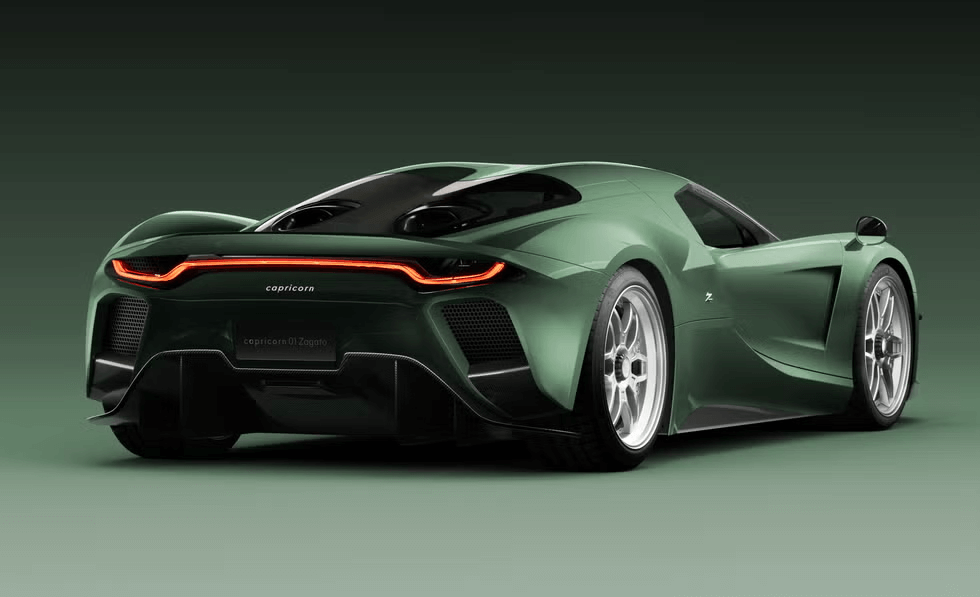
Only 19 examples of the Capricorn 01 Zagato will be produced – a fine tribute to April 19, 1919, the date of Zagato’s founding. Each will cost around £2.5 million (approximately $3.3 million). Production begins in early 2026, with allocations covering Europe, Japan, Canada, Mexico, and the Middle East.
And this is just the beginning. Capricorn plans to expand its facility at the Nürburgring, with ambitions toproduce 100 to 200 cars annually, each of which carries the same precise craftsmanship and driver-first philosophy that defines the 01.
The Capricorn 01 Zagato is not just a hypercar – it is a love letter to analog passion, a machine that intertwines eras and philosophies. Italian artistry, American muscle, and German precision – united in one breath-taking statement of intent.