You cannot remove it!

While some purists may argue that a front-wheel-drive vehicle lacks the pedigree worthy of the revered BMW emblem, the far-sighted engineers in Munich have a different opinion. Their latest offering, the updated 1 Series, introduces a new setup with transversely mounted engines.
This range includes an intriguing three-cylinder variant, marking a departure from BMW's traditionally more robust powertrains. At the top of this series is the M135, which has dropped the 'i' historically appended to its name - a subtle hint at the brand's evolving nomenclature, hinting at something more than just a model refresh.

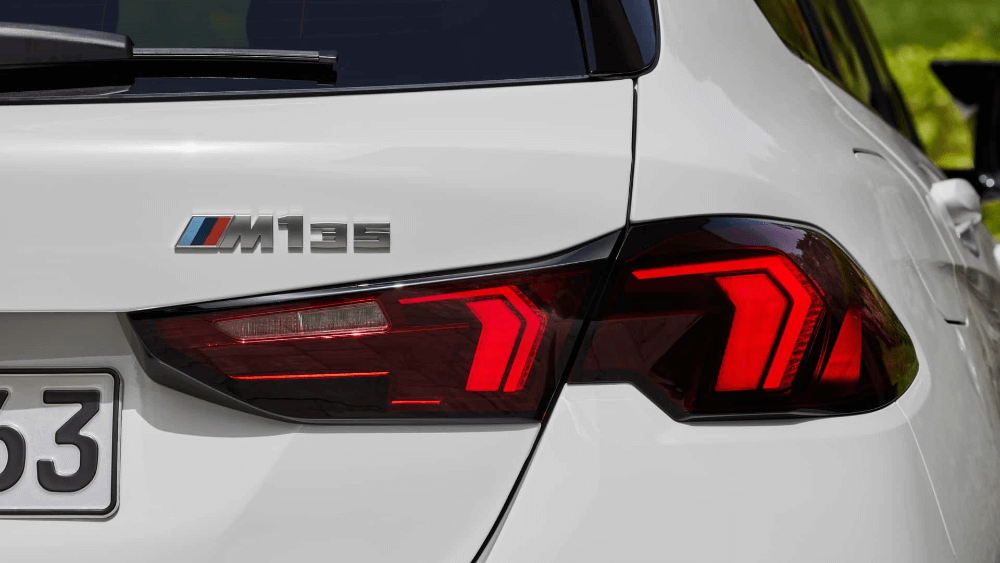
When one delves into the vehicle's specifics, the rear emblem draws special attention. This is not just about dropping a letter from the previous M135i. Interestingly, the size of the digits has been altered: 'M' and '1' retain their historical size, but '3' and '5' have been reduced. This adjustment, though minor, may mislead an untrained observer into mistaking this vehicle for the highly revered M1, BMW's iconic mid-engined supercar from a bygone era.

However, any comparison with the M1 stops at the visual likeness. The classic M1 remains a unique chapter in BMW's history, its legacy continuing only through conceptual successors such as the M1 Hommage from 2008 andVision M Nextfrom 2019 - both reflecting the spirit of the original, rather than serving as direct successors.

The difference in the emblem design - specifically the reduction in the size of the '3' and '5' digits - raises an interesting point. It should be noted that the new M135 does not feature a 3.5-liter engine, which may have justified the initial numerical designation. Instead, this change serves another purpose, likely aiming to visually and stylistically align the model with the higher echelons of the BMW lineup.

This is further evidenced by the adoption of new design elements: the iconic 'M' now adorns the front grille, a layout not seen before on its predecessor, thereby elevating its stature.
Moreover, BMW has equipped the M135 with additional features once reserved for its high-performance M models. These include quad exhaust systems and the M-specific mirror design, enhancing both the vehicle's aesthetic appeal and its performance narrative. Such features not only contribute to a more sporty appearance but also signify the vehicle's elevated status within the BMW lineup.

Interestingly, the M135 is not the first instance of BMW experimenting with such rear emblem reconfigurations. A similar approach was noted as early as 2022 with the introduction of the M760e, where 'M' and '7' were emphasized in a similar fashion, while other markings were minimized. Although it appeared similar to an M7, it was not actually a true M7 model.
This model suggests a strategic, albeit inconsistent, approach by BMW to rear emblem design across various models, as seen with the 2025 M440i, maintaining the traditional format, and electric models such as the i5 M60 and iX M60, featuring 'M'.

BMW's approach to emblem design reflects a broader strategy of blurring the lines between M Lite and the original M models, at least from a visual standpoint. This tactic is also evident in their sales strategy, where M Lite vehicles such as the i4 M50 - which notably topped BMW M sales charts in 2022 and 2023 - are reported alongside the more powerful M3 Sedan, the leading model of the M series from the previous year.

This blending of categories illustrates BMW's drive to democratize the appeal of the M brand, making it accessible to a wider audience while maintaining the exclusivity and prestige associated with their high-performance vehicles.
Through such strategic branding and product development, BMW continues to challenge conventional boundaries, reaffirming its position as a leader in automotive innovation and design.