

Lamborghini has built many dramatic cars, but only a few have changed the direction of the company. Reventón was one of them. More than just an ultra-rare supercar, it marked the moment when Lamborghini realized that scarcity, designer theater, and collector exclusivity could become a standalone business strategy. In doing so, the company helped launch a formula that the brand would repeat for years, turning limited cars into key drivers of prestige, publicity, and long-term brand value.
This formula is already well known. A small production run, radical design, seven-figure price, and immediate collector demand. But in 2007, when Lamborghini introduced the Reventón, the idea still felt new. The car was not just another flagship. It was a test case. Lamborghini wanted to know whether buyers would pay significantly more than what seemed justified by the core mechanical package, simply because the object itself felt rare, extreme, and emotionally irresistible.
The answer was yes.
The day the internet went wild over a passing car

Occasionally, a car appears on the public road that seems to disrupt the normal rhythm of daily life. It's not just that people notice it. They stop. Phones are pulled out, strangers look twice, and within minutes the information spreads online. This is especially true when the car in question is something so rare that most people have only seen it in a museum, video game, or online video.
Exactly this kind of reaction is what the Reventón still provokes. Despite being nearly two decades old,it retains the power to feel surreal when seen in motion. Verified public observations in cities like Hamburg and London prove that at least some owners still drive them, but these remain very unusual encounters. Most people will never see such a car outside of an organized event or screen. When it appears in the wild, it feels less like an ordinary exotic sight and more like a brief escape from daily reality.
This reaction is not random. It is the result of Lamborghini creating something so deliberately scarce and so visually charged that it continues to stop people long after newer, faster, and more technically advanced supercars have appeared. The car itself is important, of course, but the bigger story is why it still has this effect.
The fighter jet that Lamborghini created for the road
When Lamborghini introduced the Reventón at the Frankfurt Motor Show in 2007, it seemed as if the company had decided to build a road car from the sketchbook of a military aircraft designer. The inspiration was clear. The body was inspired by Lockheed Martin F-22 Raptor and the result was a machine defined by razor-sharp edges, angular surfaces, and a kind of intimidating geometric precision that even other Lamborghini models could not match.
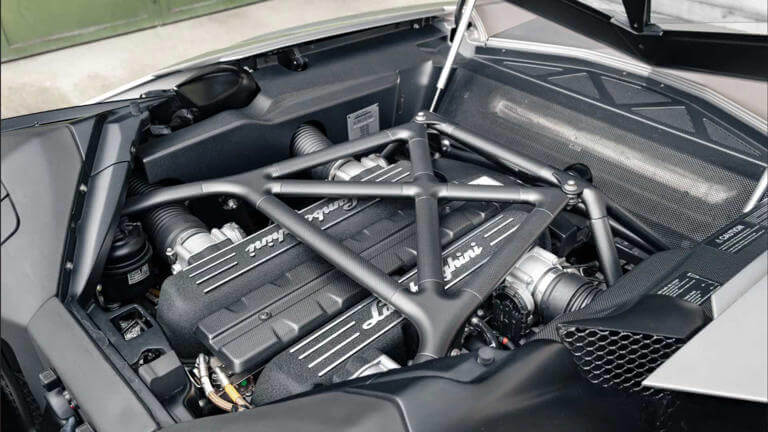
It was the first car designed in the newly established design studio Centro Stile at Lamborghini, and it announced the presence of this department in the most dramatic way possible. Under the body, Reventón shares its core platform and mechanical base with Murciélago LP640. This meant a 6.5-liter naturally aspirated V12, 641 horsepower, 600 Nm torque, a 0 to 100 km/h time of around 3.4 seconds, and a top speed of 340 km/h. These are serious numbers, but they weren't the whole idea of the car.

Murciélago already offered much of this experience for significantly less money. What Reventón offered instead was a different kind of value. It was more like a sculpture than a product, more like an object of design and exclusivity than a direct performance proposition. Lamborghini even created a special matte olive-green coating for it, which did not contain traditional pigment, using only aluminum flakes, suspended in the lacquer, to create its distinctive look. No other Lamborghini before or since has received exactly the same treatment.
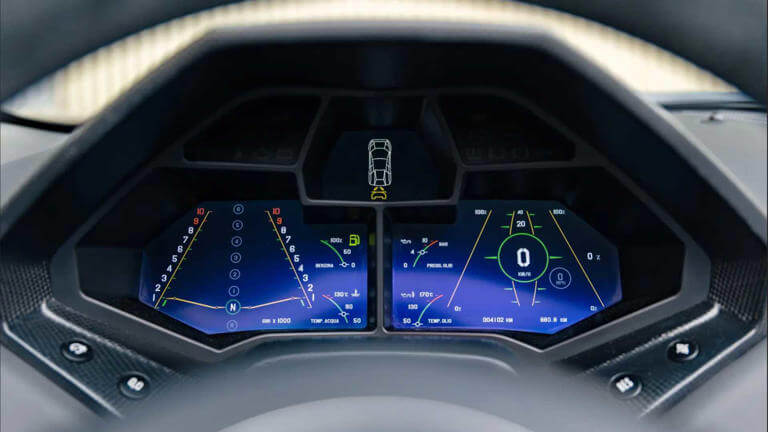
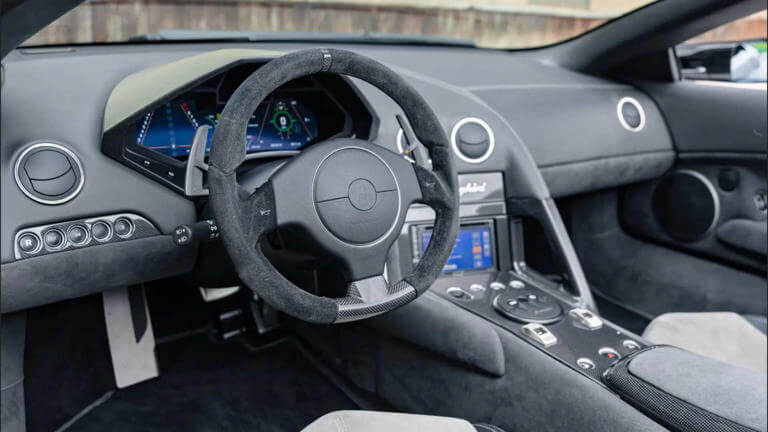
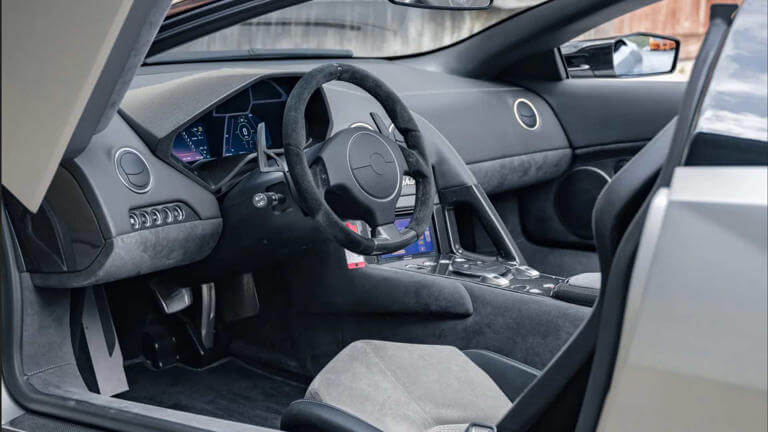
Inside, Reventón deepened the theme with airplane-inspired displays and the introduction of LCD screens in the pilot's cabin of the Lamborghini, including an instrument panel modeled on the language of a fighter jet. It also introduced ideas and materials that would later influence future Lamborghini models, including the logic of the interior display and the visual drama saturated with carbon fiber.

Only 20 customer coupes were produced, each at a price of 1 million euros, with Lamborghini retaining another example for its museum. Later followed 15 roadsters and their market response made something even clearer: Lamborghini had discovered an exceptionally profitable new niche.
The car that proved that desire is worth more than performance
At the time, critics raised an obvious question. Why would anyone pay so much more for Reventón when Murciélago LP640 essentially offered the same core features at roughly half the price? From a rational performance-per-dollar perspective, the answer was not particularly convincing.
But Reventón was never intended to win that argument.
It was not sold as an ordinary product to anyone who could afford it simply. It was offered selectively, reserved for top clients and collectors. This distinction was of immense importance because it changed the meaning of the purchase. Reventón was not just expensive. It was hard to access. It created a level of desirability that had less to do with performance than with the emotional power of rarity.
This was the real experiment. Lamborghini wanted to see whether a car could achieve a dramatic premium not because it was radically faster, but because it was radically more special. The market's response was immediate. The later roadster version traded significantly above its original asking price, with real transaction values climbing far beyond the stated ones. This proved something important for Lamborghini: exclusivity itself could be monetized at an exceptional level.
In other words, Reventón showed that desire could be more valuable than mechanical advantage.
Reventón paved the way for the future of small Lamborghini models

Once Lamborghini understood what Reventón had proven, it did not stop. Instead, it turned this idea into a recurring strategy. The company realized that ultra-limited cars, when tied to bold design and some form of technological or conceptual distinction, could generate enormous attention and demand from collectors. This became the foundation for a new class of Lamborghini models: the small halo cars.
All subsequent cars owed something to Reventón. Sesto Elemento explored radical carbon fiber construction. Veneno reduced production numbers so low that the cars practically vanished into private collections the moment they were delivered. Centenario turned a commemorative project into an instant collector's value. Sián introduced the first hybrid production model from Lamborghini, using electrification not as a compromise, but as an enhancement of the brand's drama and speed.

Each followed the template that Reventón helped to establish. Extreme style. Exceptionally limited production. A big jump in price compared to the mechanical donor. A technological element for preview. Immediate sell-out. Strong performance on the secondary market. Then the cycle would repeat.
This was not just a series of expensive special editions. This was a strategic redefinition of how Lamborghini could create value at the top of its range.
The rarest Lamborghini models do not depreciate

The market presence of Reventón only reinforced its significance. While many exotic cars lose value after their initial buzz, the rarest Lamborghini models, built on this philosophy of limited numbers, often do the opposite. Public sales of Reventón show that values have remained strong and in many cases have risen significantly above original purchase prices.
This tells its own story. Buyers were not simply paying for a shiny toy in 2007. They were buying a new type of automotive object, one in which rarity, design, and brand mythology combined to create long-term desirability. Reventón was rare at launch and remains rare today. This controlled supply is a key reason why it still feels exceptional and why values remain so resilient.
Private sales will likely rise even further, although these numbers rarely become public. The people who buy and sell such cars often operate in a collectors' world where visibility is less important than access. This secrecy only adds to the aura.
The real reason the street presence of Reventón still feels different
When Reventón appears on public roads, people do not react in the same way as with a normal supercar sighting. Even a very expensive Ferrari or McLaren can become familiar enough that an enthusiast might reasonably expect to see one during a weekend drive or in a wealthy part of town.Reventón belongs to a different category. It was produced in such small quantities that seeing one feels impossible. This impossibility is the point.
What Lamborghini created with Reventón was not just a car, but a new kind of icon. It was an object created to generate enchantment, not just admiration. The company deliberately combined extreme scarcity with an unforgettable design concept and then maintained accessibility. The result was a model that became far more powerful as a cultural object than it ever could have been as a standard performance machine.
This is why Reventón holds such significance in the history of Lamborghini. It launched something more than a limited-series supercar. It launched a strategy. A car that helped turn design-driven scarcity into a brand-building machine worth far more than the sales of any individual model. In this sense, Reventón did not just succeed as a car. It succeeded as a blueprint for how Lamborghini would create modern legends.