Mercedes-AMG continues confidently with its electric high-performance cars, despite criticism from traditional car enthusiasts. Following the introduction of the electric AMG GT 4-Door, the company is already developing another important model – AMG GT SUV, the first SUV from AMG, built on a special high-performance platform.
Instead of focusing solely on power and acceleration, AMG wants its new generation of electric models to offer handling, settings, sound, and driver engagement that connect with the brand.
The message is clear: Mercedes-AMG believes that electric propulsion is part of its future, even if some long-time fans are still not convinced.
Why does Mercedes-AMG continue to develop electric cars?
Mercedes-AMG believes it must create competitive electric sports cars to remain relevant in the rapidly changing global market.
High-performance electric cars can already offer massive power and impressive acceleration. Therefore, more horsepower alone is no longer enough to distinguish a model.
That is why AMG focuses on the overall driving experience, including:
- throttle response
- steering behavior
- traction control
- torque distribution
- chassis balance
- artificial sound
- personalization of the car's behavior
The goal is for the electric AMG to feel different, not just to be fast.
AMG GT SUV is the next big electric car from the brand
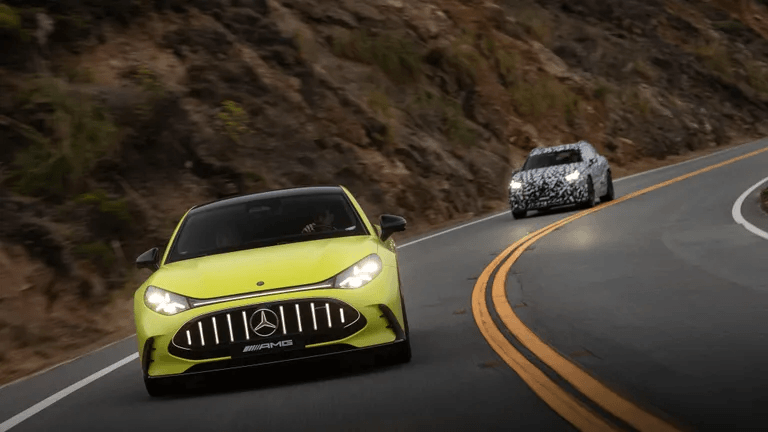
The upcoming Mercedes-AMG GT SUV will be the first SUV from AMG, developed on a special AMG platform.
It shares important technologies with the electric AMG GT 4-Door, but the SUV body makes it potentially even more important from a commercial perspective.
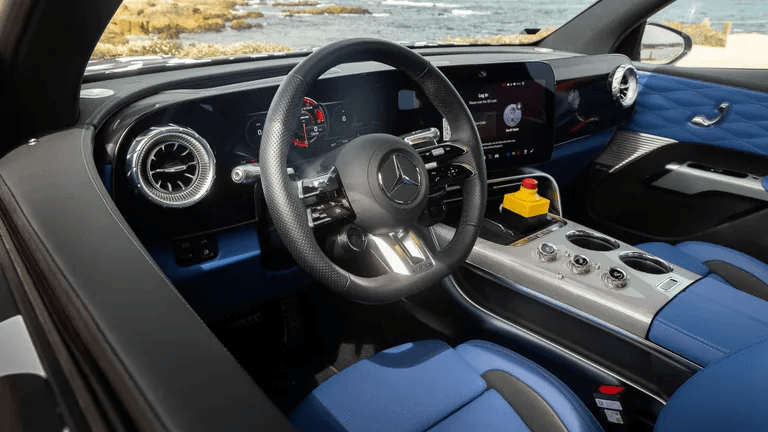
The pre-production prototype already has an almost complete interior, refined controls for handling, and complex dynamic software.
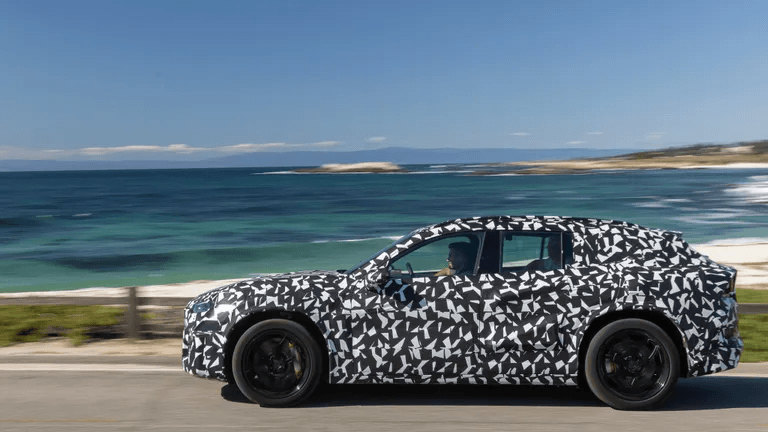
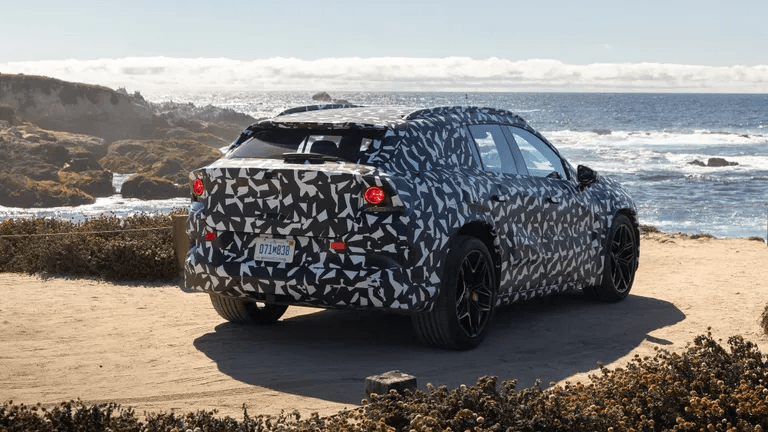
Although the test cars still have prototype equipment, AMG GT SUV looks close to production.
More importantly, AMG treats it as a true high-performance model, not just as a electric car with the AMG emblem placed on it.
How many driving modes does AMG GT SUV have?
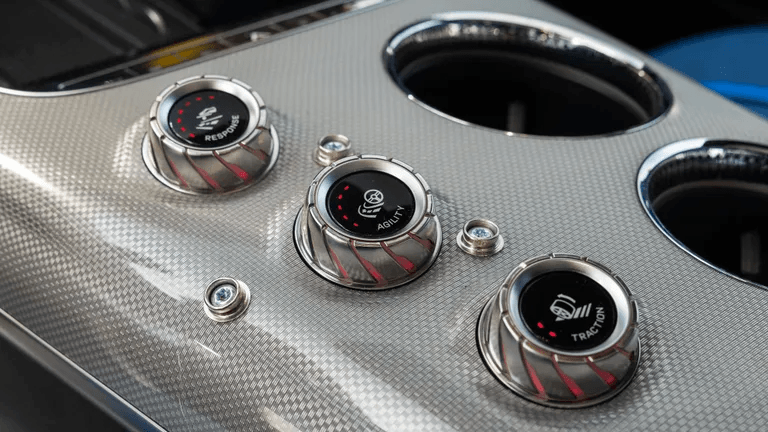
Mercedes-AMG GT SUV can offer up to 729 different combinations through three separate dynamic settings.
On the central console, there are individual controls for:
- Response
- Agility
- Traction
Each of them offers nine levels.
Since the three systems can be adjusted independently of each other, the driver theoretically has 729 different combinations.
For example, it could choose an aggressive throttle response, a more relaxed steering setting, and a completely different level of traction control intervention.
Mercedes-AMG believes that this flexibility gives drivers much greater control over the behavior of the electric car.
Why does AMG offer 729 possible settings?
The huge number of settings shows AMG's belief that software can become an important part of driver engagement in electric vehicles.
Traditional sports cars often build their character through the engine, transmission, exhaust system, and mechanical components.
Electric cars have fewer of these traditional characteristics.
Therefore, software settings allow AMG to change the way the car reacts to the driver's actions.
Instead of just one general Sport or Comfort mode, the driver can personalize different aspects of the car individually.
This can help AMG create a more personalized experience and simultaneously distinguish its electric cars from the competition.
Mercedes-AMG wants its electric cars to continue feeling like AMG
One of the biggest challenges for AMG is maintaining the brand identity in the electric era.
For decades, AMG has built its reputation around powerful internal combustion engines, characteristic exhaust sounds, rear-biased behavior, and aggressive dynamics.
Electric motors deliver power in a different way and naturally produce much less mechanical sound.
That is why AMG tries to recreate part of this emotional connection through chassis tuning, torque control, software, and artificial audio.
AMG GT SUV can generate synthetic sounds that change according to the driver's actions.
At lower speeds, a deeper rumble can be heard, and during strong acceleration, the sound becomes louder and more aggressive.
The artificial sounds will not be liked by everyone. Nevertheless, AMG sees them as another tool for creating a more engaging electric experience.
What drivetrain will Mercedes-AMG GT SUV use?
AMG GT SUV is expected to use three high-performance electric motors.
The configuration includes:
- one electric motor at the front
- two electric motors at the rear
Mercedes-AMG believes this layout is more than sufficient for the dynamic characteristics the company is seeking.
Technically, AMG could use four motors, but the engineers consider the fourth one redundant.
Instead, the dual rear electric motor plays a key role in the car's sharper and more adjustable behavior.
Why does AMG use two rear electric motors?
The two rear electric motors allow Mercedes-AMG to control the torque to each rear wheel individually.
This capability can influence how the car turns and rotates through a corner.
Additionally, the engineers can create a more pronounced rear axle behavior and even controlled oversteer – characteristics traditionally associated with powerful AMG models.
The front electric motor, on the other hand, improves traction and supports strong acceleration from a standstill.
Therefore, the three-motor configuration provides the desired dynamic behavior from AMG without adding the unnecessary weight and complexity of a fourth electric motor.
AMG focuses on handling, not just acceleration
Electric vehicles have changed the perception of performance.
Extremely fast 0 to 60 mph acceleration is now offered by many EV models, including cars that are not traditionally sports machines.
Therefore, acceleration alone no longer defines what a AMG is.
Mercedes-AMG places greater emphasis on steering feedback, chassis balance, torque distribution, braking, traction, and how the car reacts near its limits.
The goal is simple: the electric AMG must remain fun and engaging when the road becomes twistier.
This requires serious development through both computer simulations and real-world testing.
Nürburgring remains an important part of Mercedes-AMG development
Mercedes-AMG continues to use demanding tracks like Nürburgring Nordschleife during the development of its high-performance cars.
The company's engineering teams include specialists with significant track experience.
AMG's dynamics experts can undergo special certification for Nürburgring, where they must stay very close to the reference time of professional drivers in a specific car.
These reference laps can be set by experienced racing and test drivers.
Nordschleife is about 20.8 km long and combines high-speed sections, difficult corners, elevation changes, and heavy braking zones.
Therefore, testing there provides valuable information about the car's behavior under extreme load.
This experience is increasingly applied to the electric AMG models as well.
Why are some AMG fans against the brand's electric cars?
Mercedes-AMG's shift to electric performance has sparked criticism for several reasons.
Some enthusiasts do not like the design of the latest electric models. Others do not accept the simulated engine sounds.
The biggest problem for many traditional fans, however, is the loss of the characteristic internal combustion engines.
AMG has built much of its reputation around memorable V8 engines and their distinctive sound.
For these customers, replacing the engine with electric motors changes an important part of the brand's identity.
Mercedes-AMG obviously understands this criticism.
The company, however, does not seem willing to abandon its electric vehicle strategy because of it.
Why is AMG GT SUV so important?
SUV models account for a huge share of global premium car sales.
Therefore, AMG GT SUV could turn out to be more important from a commercial perspective than an electric sports sedan or coupe.
Sports cars carry prestige and build the brand image, but SUV models often ensure significantly higher sales.
Porsche demonstrates this strategy with Cayenne.
Initially, many enthusiasts criticized Porsche for the decision to create a SUV. In the end, however, Cayenne became an extremely important model for the company's business and proved that a sports car manufacturer can successfully enter the SUV segment.
Mercedes-AMG is now facing a similar challenge with its electric models.
Porsche shows why AMG cannot ignore electric SUV models.
Porsche continues to develop increasingly powerful electrified SUV cars.
This places additional pressure on Mercedes-AMG.
AMG cannot rely solely on its historical reputation for internal combustion engine cars if competitors continue to create faster and more technologically advanced electric alternatives.
Furthermore, the competition no longer comes only from the traditional German premium brands.
Chinese high-performance electric vehicles are increasing the pressure
China has become one of the most important markets for modern electric cars.
Chinese manufacturers regularly present new high-performance EV models with enormous power, improved software, modern batteries, and competitive features.
Therefore, Mercedes-AMG no longer competes only with BMW M, Porsche and other established manufacturers.
The company must also respond to the rapidly growing group of high-performance electric brands from China.
This global competition is another reason for AMG to continue investing in specialized electric platforms.
Is Mercedes-AMG interested in the criticism of its EV models?
Mercedes-AMG appears more focused on developing competitive sports cars than on the negative comments about electrification.
The company knows that part of the traditional customers may never fully accept the all-electric AMG models.
At the same time, AMG understands that future buyers will likely evaluate performance in a different way.
Acceleration will remain important, but handling, software, personalization, torque management, and driver engagement may gain increasing significance.
Therefore, Mercedes-AMG is trying to redefine what an AMG can be without abandoning the brand's core values.
What does AMG GT SUV tell us about the future of AMG?
AMG GT SUV gives a clear picture of Mercedes-AMG's electric strategy.
Instead of building an electric car around one impressive power figure, AMG is developing an entire high-performance ecosystem.
The three-motor propulsion provides the foundation. The two rear motors give precise control over dynamics, while the front improves traction and acceleration.
At the same time, 729 possible combinations of Response, Agility, and Traction provide enormous control over the car's character.
Artificial sounds add another layer of personalization.
Together, these technologies suggest that future AMG models will rely increasingly on software, electronic torque management, and extremely precise dynamic settings.
Mercedes-AMG continues forward with electric performance
Mercedes-AMG will probably never convince every fan of the V8 engine that an electric car can fully replace the emotion of a traditional AMG.
The company, however, is not simply trying to recreate the past.
Instead, it develops a new interpretation of AMG performance, based on electric motors, a modern chassis, complex software, and extensive personalization.
UpcomingAMG GT SUV could become one of the most important tests of this strategy.
Some enthusiasts will continue to criticize the electric AMG models. Others may change their minds after trying them.
Regardless of the reactions, Mercedes-AMG continues forward with its plans for electric high-performance vehicles.
Frequently asked questions
Will Mercedes-AMG become fully electric?
Mercedes-AMG is actively developing special electric high-performance models, including AMG GT 4-Door and AMG GT SUV. However, the broader AMG range may continue to use other types of propulsion.
What is Mercedes-AMG GT SUV?
AMG GT SUV is an upcoming fully electric high-performance SUV and the first AMG SUV, developed on a special AMG platform.
How many electric motors does AMG GT SUV have?
AMG GT SUV is expected to use three electric motors – one front and two rear.
Why does AMG GT SUV have two rear electric motors?
The two rear motors allow for more precise torque control to each wheel, which helps AMG to tune the behavior in corners, traction, and oversteer characteristics.
How many settings does AMG GT SUV offer?
The three controls – Response, Agility, and Traction – each have nine levels. Combined, they create 729 possible configurations.
Does the electric AMG GT SUV have artificial engine sounds?
Yes. Mercedes-AMG uses synthetic high-performance sounds that react to the driver's actions and aim to make electric driving more emotional and engaging.