
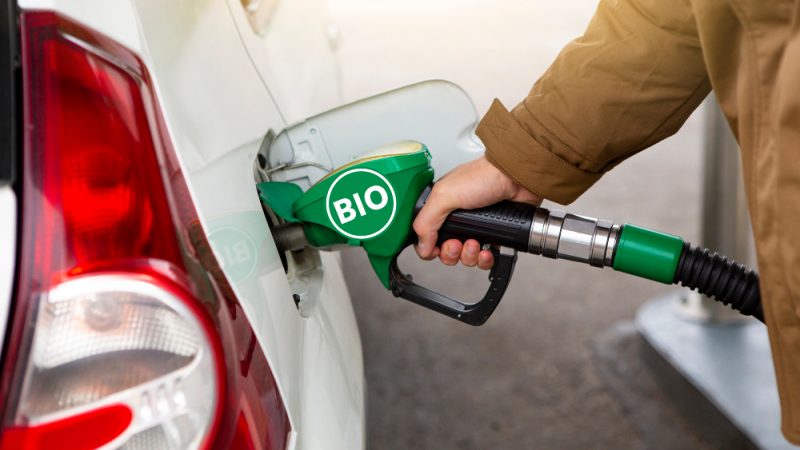
Biofuels are considered a 'green alternative' to fossil fuels and are part of the measures for environmental protection. According to European Union requirements, from 2022, the replacement of the previously usedpetrol A95-E5with the newbiofuel E10.
What is E10?
According to the EU regulation, a bio-component must be added to standard liquid fuels. E10is abiofuel, in which ordinary petrol is 90%, and the remaining 10% is bioethanol.
Statistics show that this amount of bioethanol is sufficient to reduce:
- greenhouse gases by 19%
- carbon monoxide by 30%
- solid particles in the exhaust gases by 50%
- toxicity of the exhaust gases by 21%
- smog by 25%

Some European countries will make a sharp change from ordinary fuel to E10, but in Bulgaria, the dose of bioethanol is increasing gradually – in 2018, the additive was 8%, and later it was increased to 9%.
Is there a risk to our car if we switch from standard petrol to E10?
According to the petroleum association, the amount of bioethanol in the fuel should not be increased. Higher content leads to a drop in the car's power and creates conditions for the formation of corrosion in the engine. We are warned about the latter by Kameliya Slaveykova – a member of the board of directors.

Fuel expert Dr. Dan Clark agrees with the above statements and adds that most problems occur in colder weather.
Bioethanol has the property of mixing with water, and damp weather is a condition for the formation of condensation. If it enters the car's tank and contact is made between the two, an ethanol-water layer will form at the bottom. When this liquid is drawn into the cylinders by the fuel pump, there is a high probability of detonation.
Which cars are not suitable for the new E10 petrol?
Modern cars have engines that are capable of withstanding greater loads, but many of the older models are not suitable for use with the new fuel.
On Bulgarian roads, old cars continue to prevail, whose age sometimes exceeds that of their drivers. For them, it is better to stick to the consumption of the familiar E5, which will continue to exist, but in an improved and more expensive form, namely A98 and A100.
Discussions continue on the subject of biofuels. It remains to be seen whether their benefits will be confirmed or whether they will be the cause of more problems.